Customer Appreciation Day

I love hearing customer feedback.  Where did you plant your starts; how did you grow them; when did they flower: have you clipped any leaves and into what dish were they added; what was the heat level? One of our customers, Robert recently sent the progress of his plant starts.  The below shows his initial planting in March and a July/August update.  (Note, full shade.  Very important.)  He's authorized us to use his communication verbatim:

Markus,

“My wasabi plants have almost reached their one year! Besides a few set backs the plants have been great. The rhizomes are about two inches long and growing well. I just started seeing flowers on one plant...is that a sign of the end or will it keep growing? Should I cut it?  Again thanks for your time and amazing business!  … The set backs I mentioned were mostly do to aphids and heat in the summer. I added shade cloth for the heat and neem oil for the aphids. The plants lost most their leaves but came back fast.”

~Robbie


image
image-1

Customer Plant in Willamette Valley Oregon.  Planted late summer 2013 and still so happy it's flowering!  Photo in late Spring 2016


1-year old plant grown in Portland Oregon.  Thank you Hac  https://www.instagram.com/rottenkoala/

Posted on August 7, 2015 .

WASABI: CULTIVATION AND CULTURE, BY ZOË TEMPLETON - Buckteeth Magazine

Wasabi Fans, Do you know the feeling when somebody tells you that the thing you've created excites them?  Well it's a rhetorical question, but please indulge me while I tell you how it feels to me.  It's the primary reason I do this.  Providing something that brings people pleasure on so many levels: the obvious palette pleasure, the pleasure of something new (for many), the pleasure of fond memories  (for some), and the pleasure of helping others refine their art (cooking in this case).  I get as much pleasure as my customers; if not more.  And, how to feels to have that pleasure returned in the form of an appreciative article  - and one that was produced without my prior knowledge?  Few other things in life feel that good.

So, the following article is a little about wasabi, wasabi in the PNW and why wasabi is so rare and appreciated.

I hope you derive as much pleasure from this article as I did:

WASABI: CULTIVATION AND CULTURE, BY ZOË TEMPLETON

templeton-zoe_6049574_62273537_4-1

Posted on August 7, 2015 .

Wilting Leaves: Maintain Hope - Keep Watering

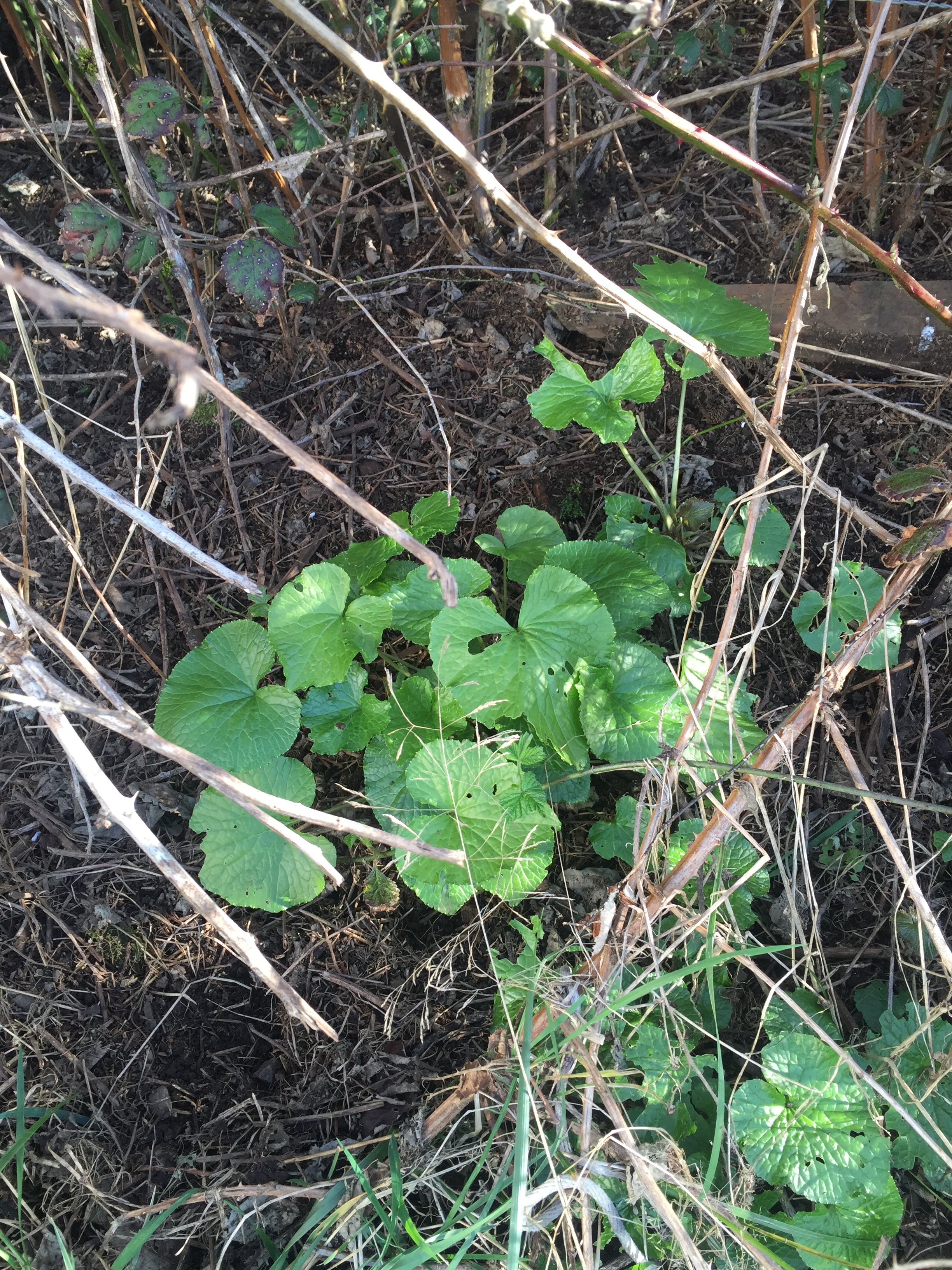
If (when) the ambient air temperature surpasses 80dF, the plants will stop growing and likely wilt (particularly if not watered daily).  If this occurs, keep watering; maintain hope, they should regrow once the temperatures drop again.   Do not compost the plants; they are only waiting for the temperatures to drop again. Remember, wasabi is really hardy.  See our blog post about plants being in the refrigerator for 8 months in a totally sealed/anaerobic environment and still growing.  If you garden is too hot, keep watering, or if you planted them in a sunny location, use this opportunity to transplant them. The plants in the shrubbery below are under the blackberry hedgerow.  They've been there for 5 years.  We've been monitoring them.  We tossed offshoots here as an experiment.  No watering, no tending, no special sauce, no care whatsoever (and no sunlight in the summer months).  The plants are growing each year.  They reduce a bit in summer and rejuvenate in Autumn and really reinvigorate in the Spring.  If these are any example for you; keep watering.  Wasabi's natural habitat is alpine streams; under fir canopy and in or near streams with that cold water and air cell around it.  (Ever walk near a stream on a hot summer night when the air was still and the temperature drops ~15d?)  Once the plants are outside their desired conditions, they rebel by shutting down to preserve energy.  Just don't let them get dry and they should rally once the scarves return to your wardrobe.

IMG_2178 IMG_2180

Posted on June 15, 2015 .

Wasabi in Everybody's Garden

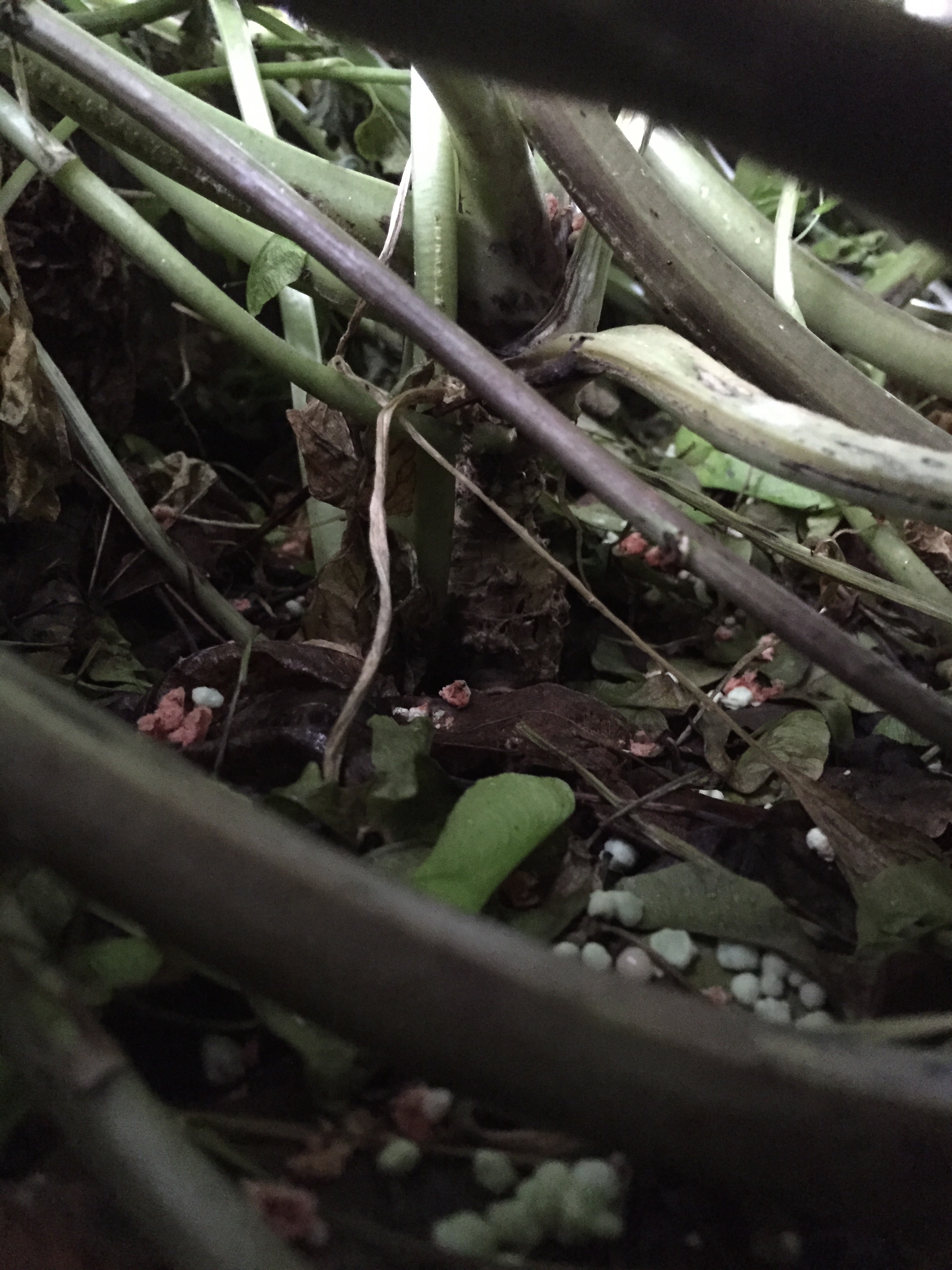
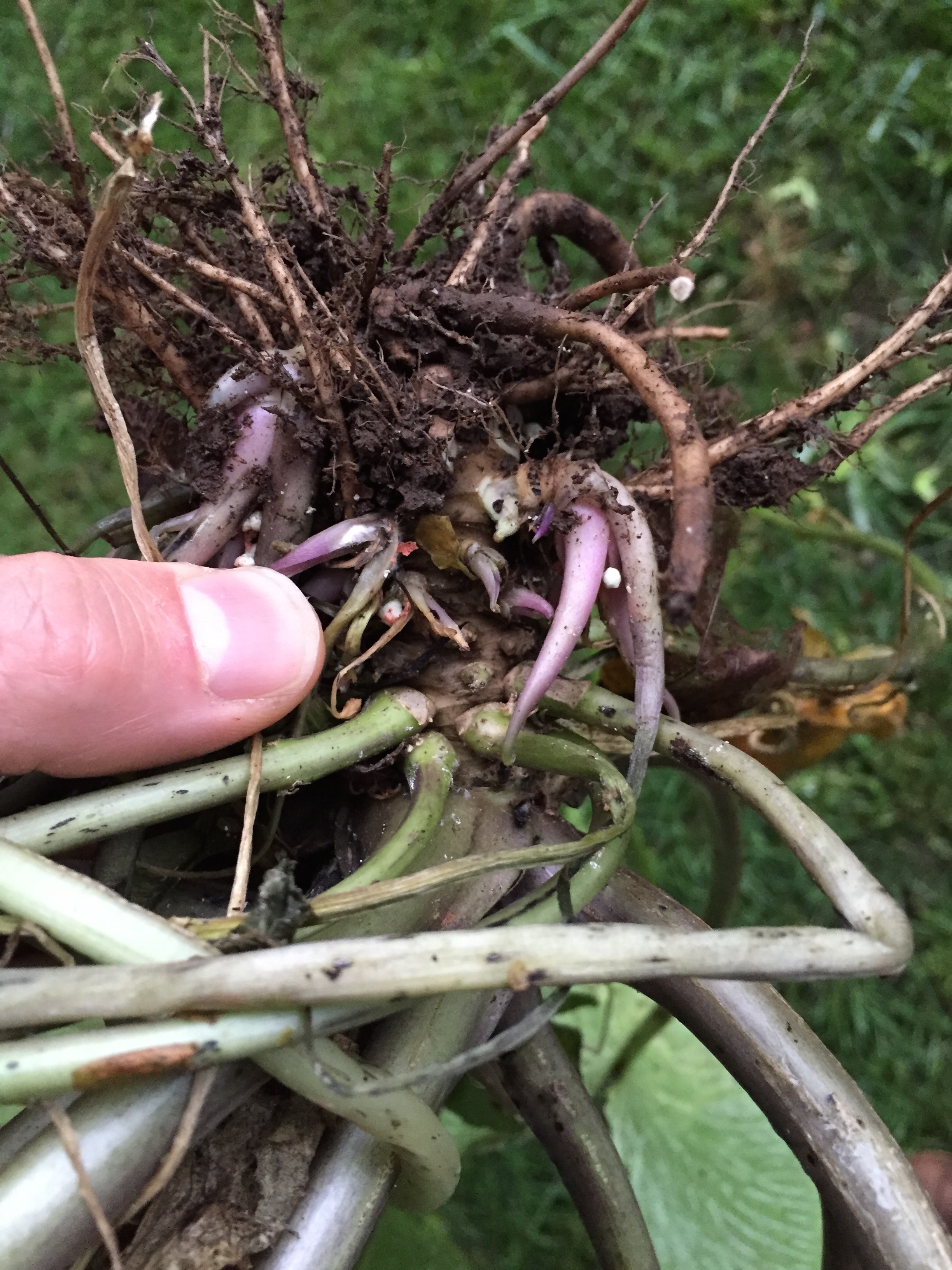
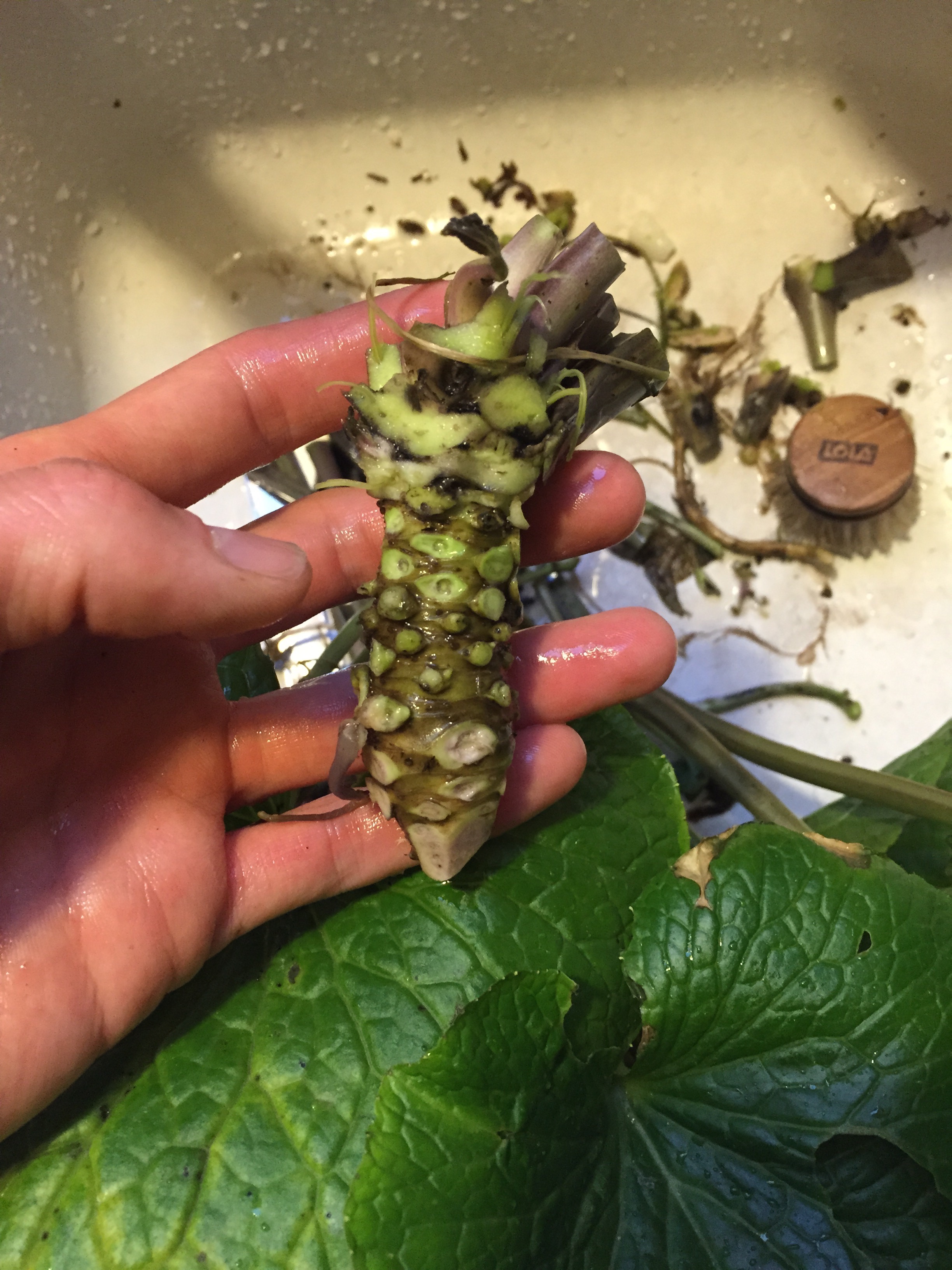
Wasabi rhizomes can grow in the garden.  Absolutely they can.  Ours did.  No secret sauce added.  We planted these in September 2014.  Several months later, a small rhizome with enough paste for a sushi dinner for a few diners.  We used a couple handfuls of 14-14-14 fertilizer three times during the growing duration (note, the offshoots were planted in autumn and grew throughout the winter).  These were just like the small, trimmed offshoots we sell.  They grew happily in full shade (I can't stress this enough).  They were planted in a wine barrel which had amended soil.  That's it.  The wasabi paste was spicy and tangy and would definitely accompany fish or do well in a sauce.  The reddish colored paste is from the root area and is because it's a mazuma variety.  The green colored paste is from the top of the rhizome and is a bit more watery, but definitely flavorful. Note that in photo two, there are little purple offshoots that could be broken off and replanted to propagate more wasabi in the garden.  As wasabi suffers very little transplant shock, one could dig up the plant, remove the offshoots and then expand the wasabi patch.

Well, now we know it works outside the greenhouse and without the benefit of the secret sauce.  (Though, we knew that already.  Check out the very last picture which are wasabi plants that have been growing under our blackberry hedgerow for several years.  They're now wild field wasabi.)

Next experiment: grow the rhizome in the garden, cut off the apical meristem and re-plant to see if it regrows (it does in the greenhouses at the farm).  Also remember, the leaves and stems can be eaten at any time.

The first photo is at ground height - it's a bit disorienting.  The photos are in sequence from harvesting to grating.

IMG_2361_2 IMG_2362_2 IMG_2363_2 IMG_2364 IMG_2365 IMG_2367_2 IMG_2370 IMG_2374_2

Posted on May 11, 2015 .

Summer's Coming, But I Wish It Were Autumn

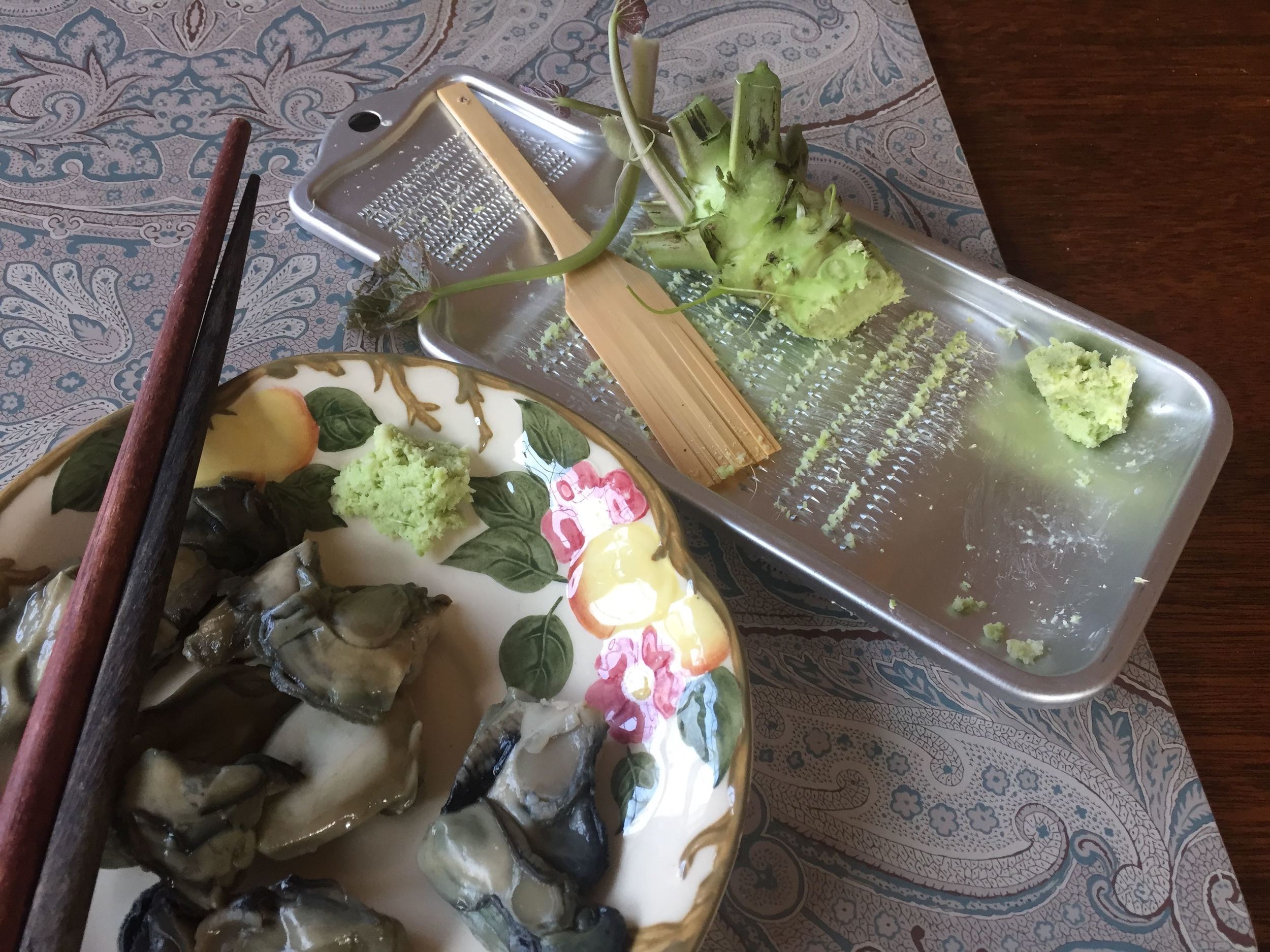
The rhizomes are getting larger each day.  They are green, healthy, hot and flavorful.  The flavor is really developing well.  One of the joys of farming is to observe (read: taste and enjoy) the taste progression/maturation of your crop.  The same is true with wasabi.  The heat and flavor are much more developed at about 80grams than 30grams.  I think the flavor even improves at 120grams.  But, we got to enjoy our first dish with this years' budding crop.  Our new friend Eric at Bar Avignon generously plied us with fresh Netarts Bay oysters and our other new friends at DeGarde Brewing generously shared their beer.  I've told anybody that will listen that it's the best beer I've ever tasted.  With wasabi the smoke flavor in the oysters really popped with that added heat.  The sweet vegetable flavor really extended the oyster flavor and mellowed it somewhat.  But, in the half shell, the sour beer with the brine was outstanding.  I want Autumn to be here so I can share more rhizomes with friends and customers, but I am very excited for summer with oysters and a pint at the foot of Netarts Bay with our new friends. IMG_2312

Posted on April 20, 2015 .