


Photo: Pechluck suwatanapongched laskey with Pechluck's Food Adventures
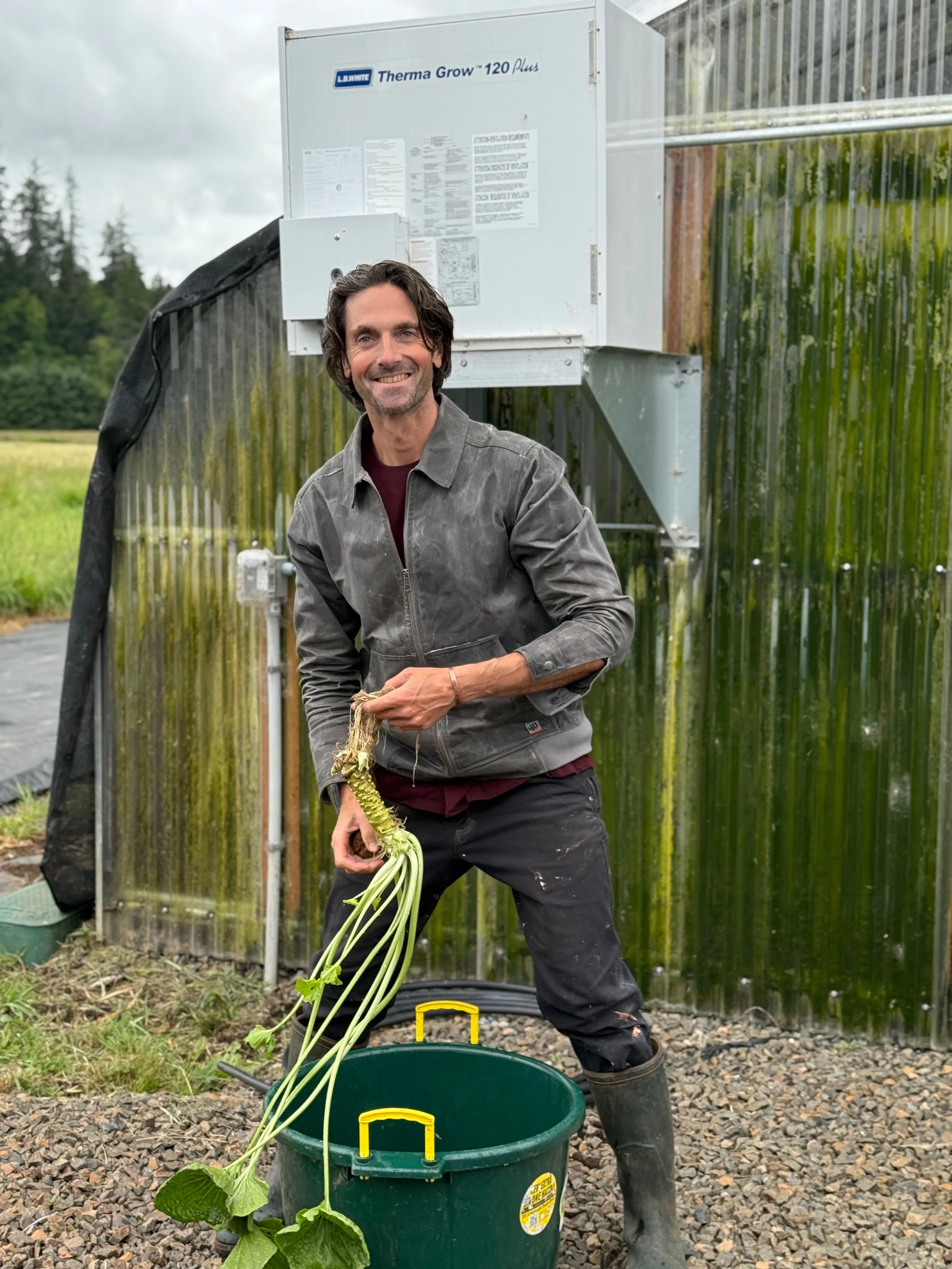
The Oregon Coast Wasabi Story
Oregon Coast Wasabi the oldest wasabi farm in the United States.
Jennifer and her husband Markus started the company that became Oregon Coast Wasabi in 2009. Thier first harvest was May 2011.
For the first seven years the company was known as Frog Eyes Wasabi and in the fall of 2017 the company renamed to Oregon Coast Wasabi to prepare for the next growth phase.
They had no idea the immense undertaking once they decided to grow wasabi commercially. Wasabi was not even listed as a “crop” by the USDA when they began (OCW got it listed after years of effort). Thus, no farm assistance or other resources were officially available. They funded and researched everything on their own. They initiated the market for domestically-grown wasabi in the USA. They have since produced the first USA-grown wasabi powder and brought it to market (made with 100% wasabi rhizome).
Their goal is to introduce more people to the flavor and benefits of fresh wasabi. From their business, customers can grow their own wasabi by planting starts in their backyard and eat fresh wasabi greens, buy fresh rhizomes or powder with no filler (100% Oregon-grown wasabi), wasabi capsules, leaves and stems straight from the farm all-year round.
Jennifer is the CFO and Markus is the CEO. There are currently four employees.
Why Wasabi?
In 2003, Jennifer received a rare gift of some wasabi plants. (These are rare today in the USA, and in 2003, nearly unheard-of.). She planted them in her backyard and they grew!
The couple wanted to grow a commercial specialty crop. They initially thought about growing olives as it was a new crop in Oregon thanks to the Durant family in Dundee OR, but they did love wasabi and she knew how to grow it – at least in a backyard.
Two things shifted their focus to wasabi:
they learned that is that 99% of the “wasabi” in US sushi restaurants is fake and most people don’t know that they are being misled about what they are buying and eating; and
the extraordinary health benefits it could offer. The idea of growing something to help people heal was quite compelling.